
Cross border service provision permit in a nutshell
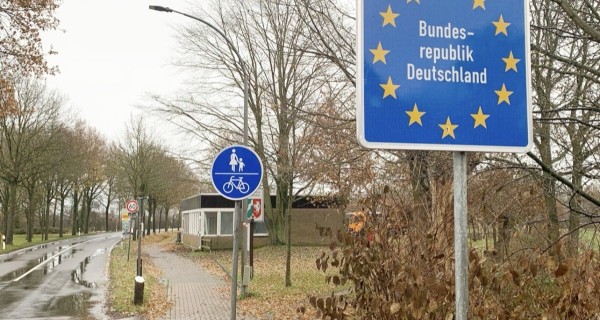
Freedom of movement is one of the cornerstones of the European Union. Pursuant to article 56 of the the Treaty on the Functioning of the European Union (“TFEU”), restrictions on freedom to provide services within the Union shall be prohibited. In the Essent judgment (C-91/13), the European Court of Justice (“CJEU”) holds that “the provision of such services between two undertakings which are established in two separate Member States falls within the scope of article 56 TFEU [...], and, secondly, the fact that the workers made available are nationals of non-member countries is, in that regard, irrelevant (para. 39)”
Ideally, an enterprise established in a Member State would let their employees travel to a customer in another EU Member State, with a view to providing their customer with service. Nevertheless, the authorities of some EU Member States consider this approach as “slapdash,” and they contend that it poses a threat to their public order and national labour market etc.
As the CJEU points out in its Essent judgment (para. 49), the matter relating to the posting of non-EU workers in the framework of the cross-border provision of services has so far not been harmonised at EU level. Thus, it must be examined whether the restrictions on the freedom to provide services arising from the legislation of a Member State can be justified by an objective in the public interest and, if so, whether they are necessary to pursue, effectively and by appropriate means, that objective.
In other words, such checks by the receiving Member State must observe the limits imposed by EU law, and they may not go beyond necessity (para. 53). For example, as the CJEU explains (para. 56), a Member State retaining on a permanent basis a work permit requirement for non-EU nationals posted by a company located in another EU Member State exceeds the limits. On the other hand, an obligation imposed on a service-providing undertaking to report beforehand to the Netherlands authorities the presence of one or more posted workers, the anticipated duration etc. can be in line with EU law.
Pre-registration on the Dutch governmental site
In reality, when a company located in another Member State intends to provide their Dutch client with service through posting their (non-EU) workers to the Netherlands, the company needs to report a plethora of details of both their project and posted workers to the Dutch Government on the site of www.postedworkers.nl The reported information includes, for example, the recipient of their service, the names, nationalities and ID details of their posted workers.
Residence permit application
If a posted worker is a non-EU citizen and they intend to stay longer than 90 days in the Netherlands, an application for cross border service provision ("grensoverschrijdende dienstverlening") permit needs to be submitted to the IND. When asking for such a permit, it is important that the required details have been reported on the aforementioned website.
According to the IND policy, the IND will verify the issue as to whether the return of a posted worker to the first Member State will be safeguarded. For this purpose, the IND will check the remainder of the employment contract and the remaining validity of the residence card. For example, a Mexican consultant gets seconded by their Italian employer to the Netherlands, with a view to providing service to a Dutch commericial client. The anticipated duration of the assignment is eight months. However, the Mexican consultant’s Italian residence permit is about to expire within 5 months. In this case, the IND will only issue a 5 month (minus 1 day) permit, with a view to letting the Mexican employee return to Italy before the expiry date.
The maximum validity of a cross border service provision permit is 2 years.
Contact us
Should you have more questions about the cross-border service provision permit, please feel free to book a consultation with one of our lawyers.

Related articles
- Possibly longer search period for some (settled) highly skilled migrants
- Highly skilled migrant: common incidents of non-compliance
- Fancy a Dutch startup visa? Beware of this palaver!
- Travelling to the EU? Be prepared for the strict new security system ETIAS (the European Travel Information and Authorisation System)
- IND Compliance Check: DAFT visa and Dutch Japanese Treaty visa
- The European blue card: the application in a nutshell
- Unemployment benefit and its impact on your Dutch residence rights
- How can an American entrepreneur obtain Dutch permanent residence?